

European Defence Fund (EDF) – Work Programme 2026 Officially Adopted
The European Commission has officially adopted the European Defence Fund (EDF) Work Programme for 2026, confirming the EU’s continued commitment to strengthening European defence capabilities, technological sovereignty, and industrial cooperation across Member States.
For 2026, the EDF allocates a total budget of €1.006 billion, with:
- €329.9 million dedicated to defence research, and
- €676.1 million allocated to capability development activities
The programme covers the full spectrum of defence R&D, from early-stage research to advanced system development, supporting collaborative projects that enhance interoperability, resilience, and operational effectiveness of European armed forces.
Key Focus Areas for 2026
The EDF 2026 Work Programme is structured around 16 thematic categories, including:
- Air and missile defence
- Ground combat and future main battle tank systems
- Naval combat and underwater warfare
- Cyber defence and secure communications
- Space-based defence capabilities
- Digital transformation, AI, and cloud-enabled military operations
- Energy resilience, environmental transition, and clean defence technologies
- Disruptive technologies and innovation-driven solutions
Special emphasis is placed on advanced digital technologies, deep tech, clean technologies, and biotechnologies, in line with the EU’s Strategic Technologies for Europe Platform (STEP) objectives, which are supported by a significant share of EDF funding in 2026.
Strong Support for SMEs and Innovation
A key pillar of the EDF remains the active participation of SMEs and research organisations, through:
- dedicated SME-focused calls,
- non-thematic innovation actions,
- business coaching and acceleration mechanisms,
- and access to blended finance and equity instruments under InvestEU.
These measures aim to strengthen the European Defence Technological and Industrial Base (EDTIB), reduce strategic dependencies, and accelerate the transition of innovative technologies from research to operational capability.
What This Means for Industry and Research Organisations
The EDF 2026 Work Programme creates significant opportunities for:
- defence industries and system integrators,
- SMEs and start-ups with dual-use or defence-specific technologies,
- research centres and universities,
- cross-border consortia seeking to develop next-generation defence capabilities.
Successful participation requires early positioning, strong consortium building, and alignment with EU capability priorities and regulatory requirements.
How EBS Consulting Supports EDF Participation
EBS Consulting supports organisations throughout the entire EDF lifecycle, including:
- strategic analysis of EDF priorities and call topics,
- consortium building and partner identification,
- proposal structuring and compliance,
- alignment with EU, EDA, and NATO capability frameworks,
- and long-term exploitation and follow-up planning.
The EDF 2026 Work Programme confirms that collaborative, innovation-driven defence development remains a strategic priority for the European Union, offering concrete pathways for organisations ready to engage at European level.
Share this article
More news
From Defence to Innovation: Alexandros Kapetanakis in Business Magazine UAE
In a new interview, the Founder and CEO of EBS Consulting talks about the company’s journey and what it takes for a company to enter the defence market.
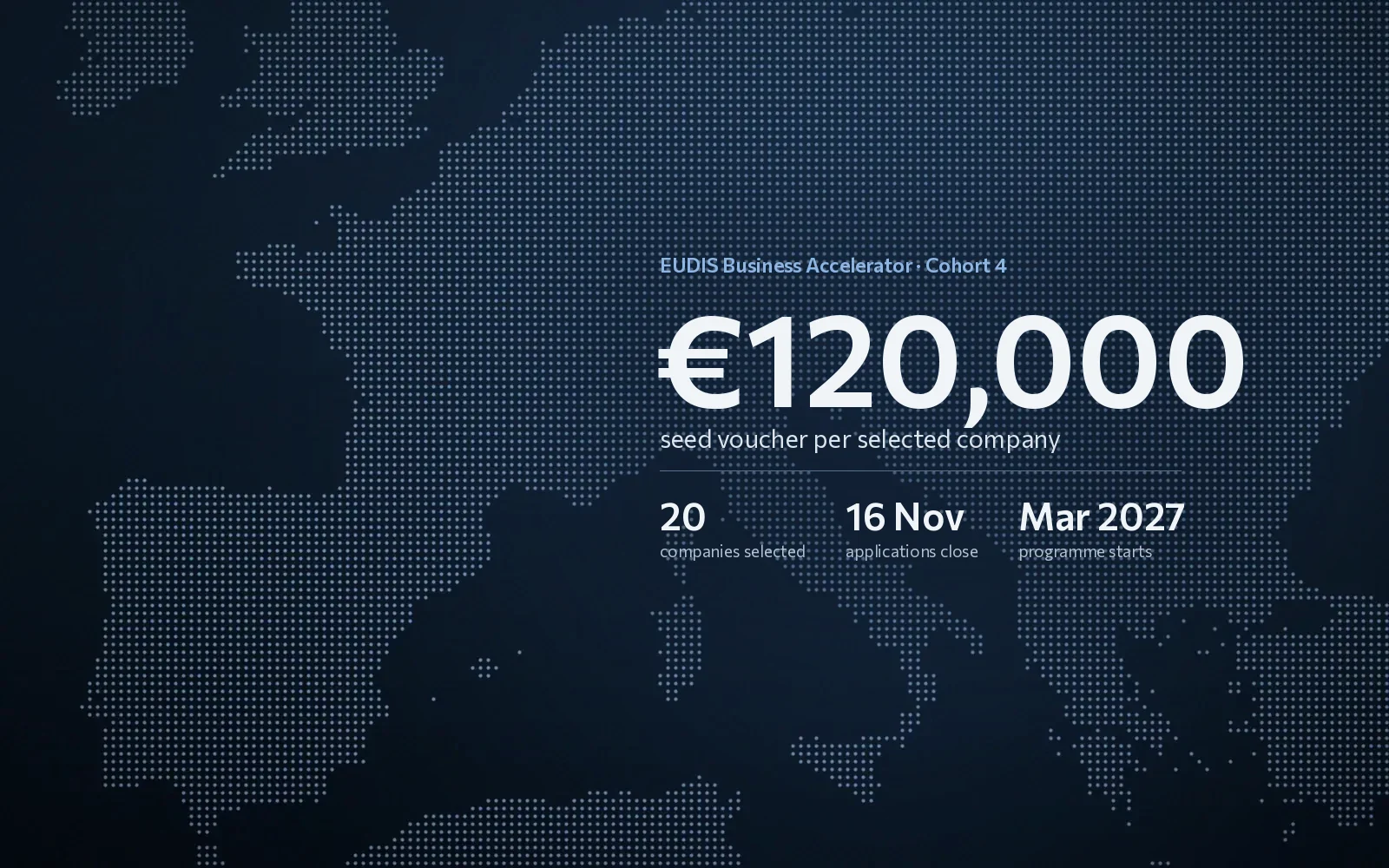
EUDIS Business Accelerator Opens Applications for Its Spring 2027 Cohort
The EU's defence accelerator will select 20 start-ups and scale-ups from the EU and Norway, each with a €120,000 voucher. Applications close on 16 November 2026.
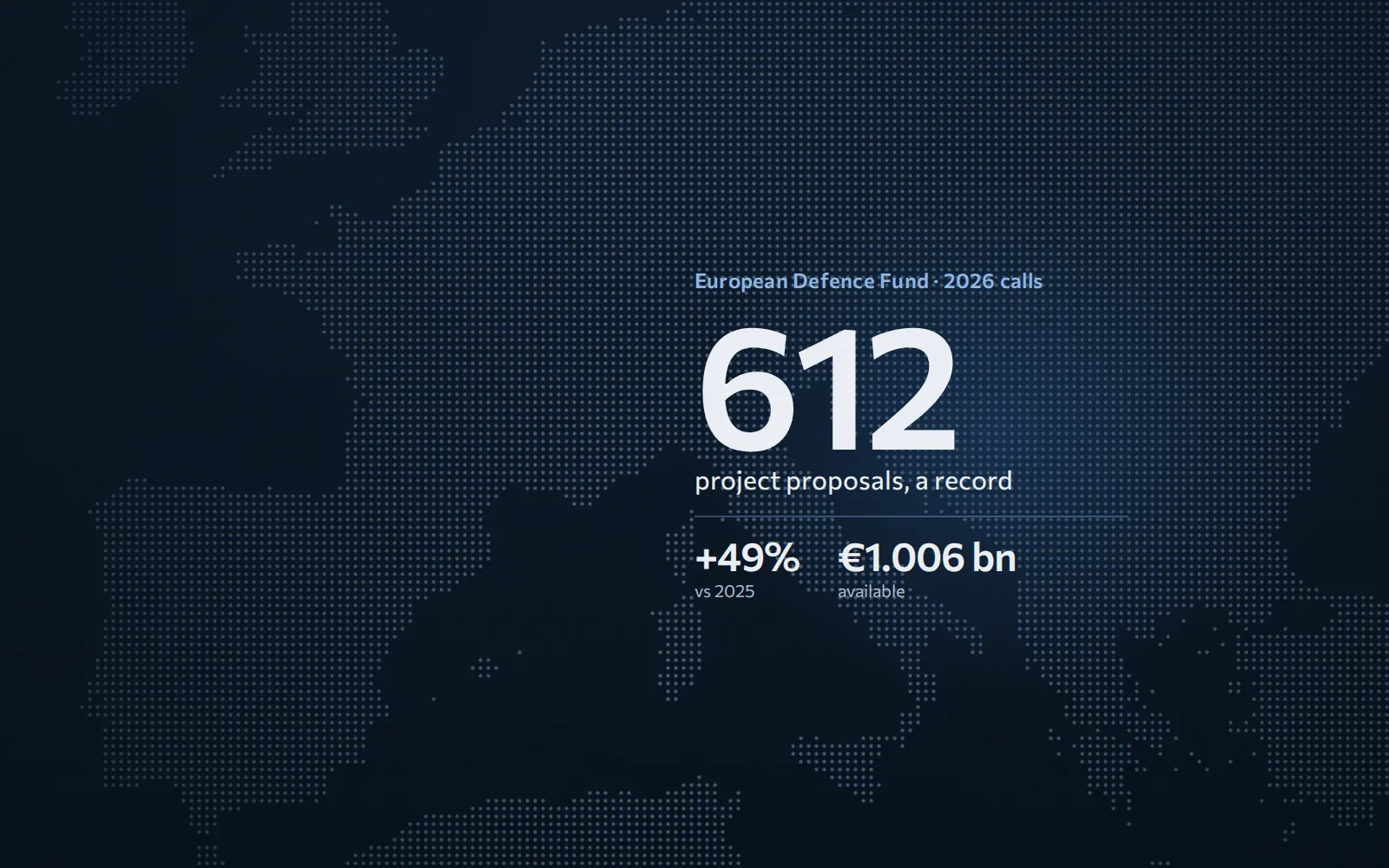
Record 612 Proposals Under the European Defence Fund 2026 Calls
The EDF 2026 calls drew a record 612 proposals for €1.006 billion, 49% more than last year. Results are expected by March 2027.